-9%
Twinkle Gupta
Higher Judicial Service Examinations MCQs Subject-Wise
₹633₹695
Inclusive of all taxes
Check Delivery
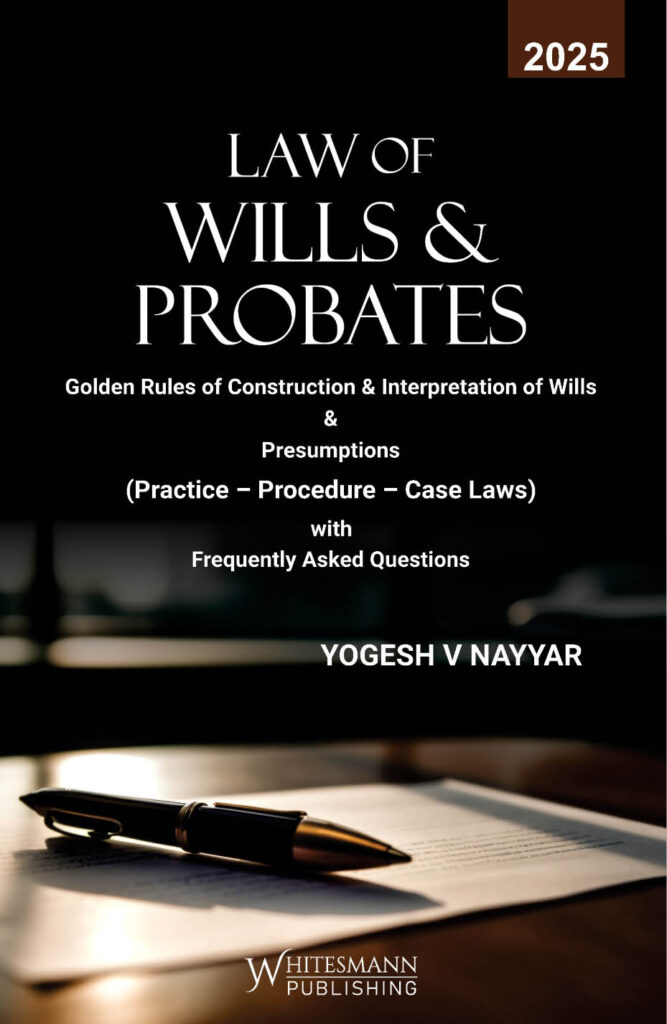
Here is a concise overview of the Law of Wills & Probates in India:
—
📘 Law of Wills and Probates – Overview
1. Wills – Definition & Essentials
A will is a legal declaration of the intention of a person (testator) about the distribution of his property after death.
Governing law:
Indian Succession Act, 1925 (for most communities, except Muslims who are governed by personal law).
Key Features of a Valid Will:
Must be made by a person of sound mind and not under coercion.
Must express intention to distribute property after death.
Must be signed by the testator and attested by two witnesses.
2. Types of Wills
Privileged Will – For soldiers, airmen, or mariners in active service.
Unprivileged Will – For all others.
Holograph Will – Written entirely in the handwriting of the testator.
Joint/Mutual Will – Made by two or more persons.
3. Codicil
A document to amend, modify, or revoke a part of the will without rewriting the entire will.
4. Probate
Probate is a legal process in which the will is authenticated by a competent court.
After granting probate, the executor gets legal authority to administer the estate.
When is Probate Required?
Mandatory for wills in:
Presidency towns (Mumbai, Chennai, Kolkata)
Wills involving immovable property situated within these cities.
5. Executor of a Will
A person appointed by the testator to carry out the provisions of the will.
If no executor is named, the court may appoint an administrator.
6. Letter of Administration
Granted by court when:
There is no will (intestate succession).
No executor is named or willing to act.
Allows the administrator to manage the deceased’s estate.
7. Revocation of Will
A will can be revoked:
By writing a new will.
By destroying the original will.
By marriage (under certain personal laws).
8. Contesting a Will
Grounds:
Lack of testamentary capacity.
Fraud, coercion, or undue influence.
Forgery or improper execution.
—
🔍 Challenges in Will & Probate Law
Delay in probate proceedings.
Disputes among legal heirs.
Forged or fabricated wills.
Issues in cross-border succession.
Lack of awareness of legal formalities.
You May Also Like